Leak Symptoms and Replacement Timing
- Cooling that fades over weeks. A slow loss of performance usually means a slow leak; if a top-up restores it for a while, find the leak before adding more refrigerant.
- An oily film at a crimp or fitting. Refrigerant carries lubricant with it, so a weep leaves a dark, slightly oily trace exactly where the joint is failing.
- Corrosion along the tube. Pitting or powdering on the metal hard line, often where road salt collects, is a line that will not survive another season.
- Rubbing marks. A polished patch on the tube or a flattened bracket cushion means the line has been moving against the body — replace the line and correct the bracket.
- A kinked line after front-end work. A bent hard line can still hold pressure while restricting flow, so fit a replacement A/C hose rather than straightening the tube.
- A dye test that points at the line. When ultraviolet dye shows the leak at the hose and not at the condenser, compressor or evaporator joints, this is the part to change.
A/C Hose Assembly Overview
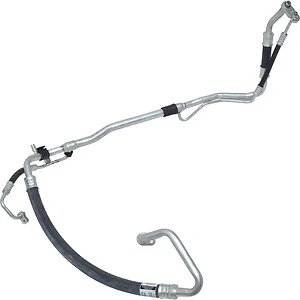
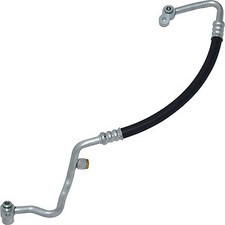
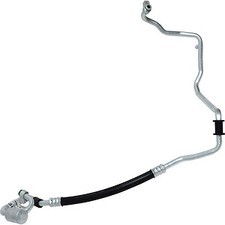
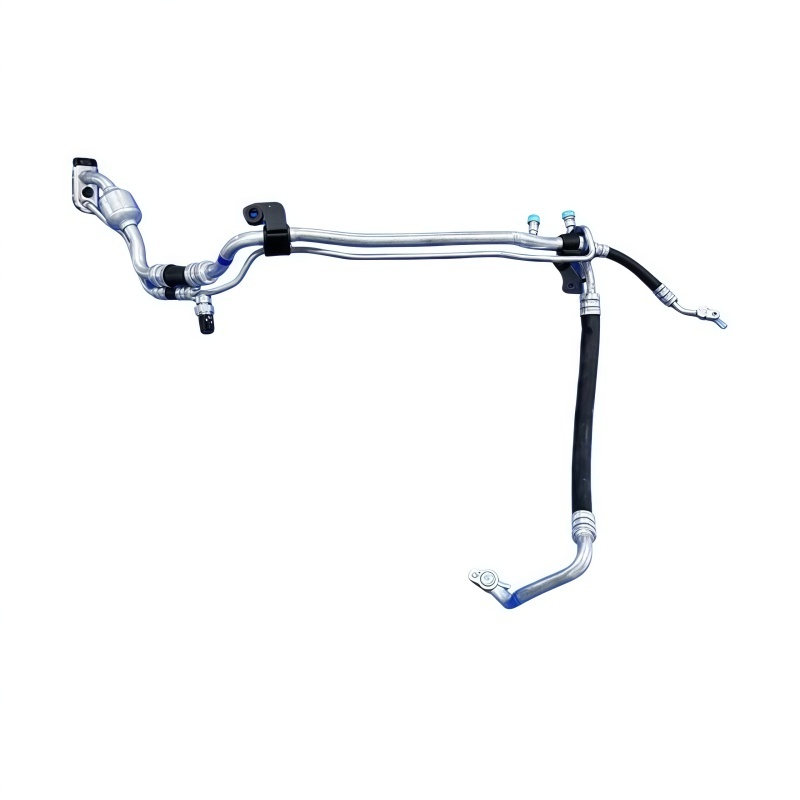
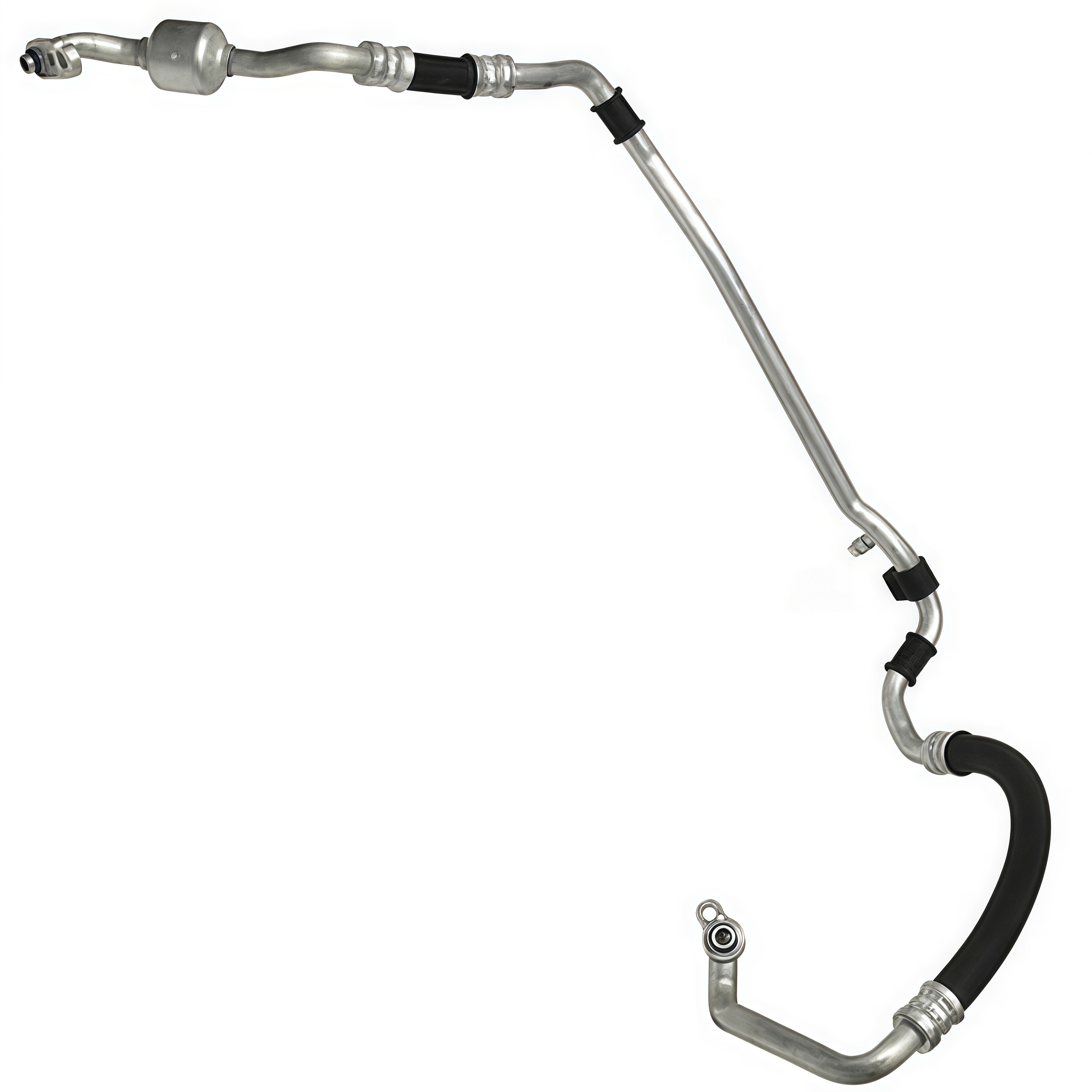
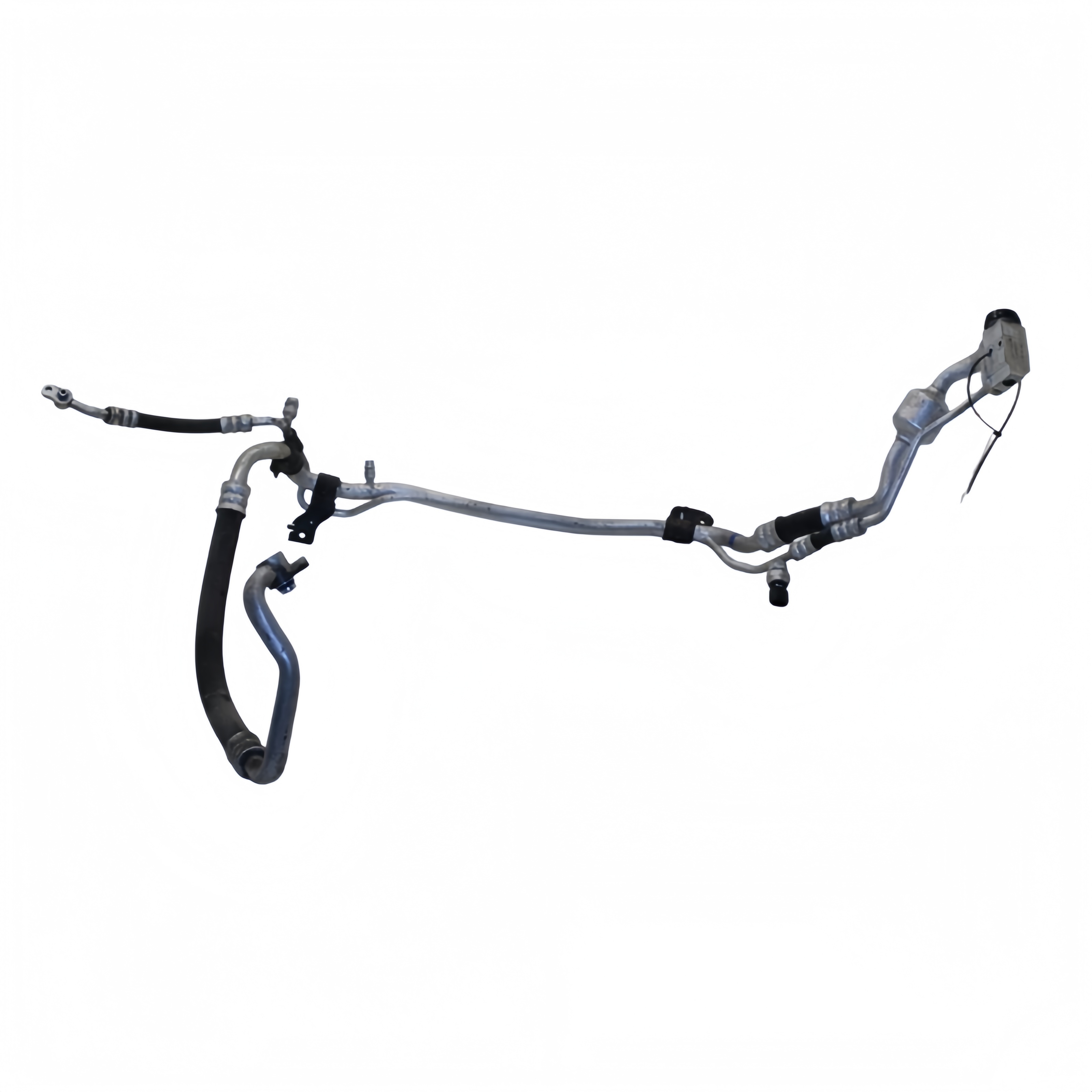
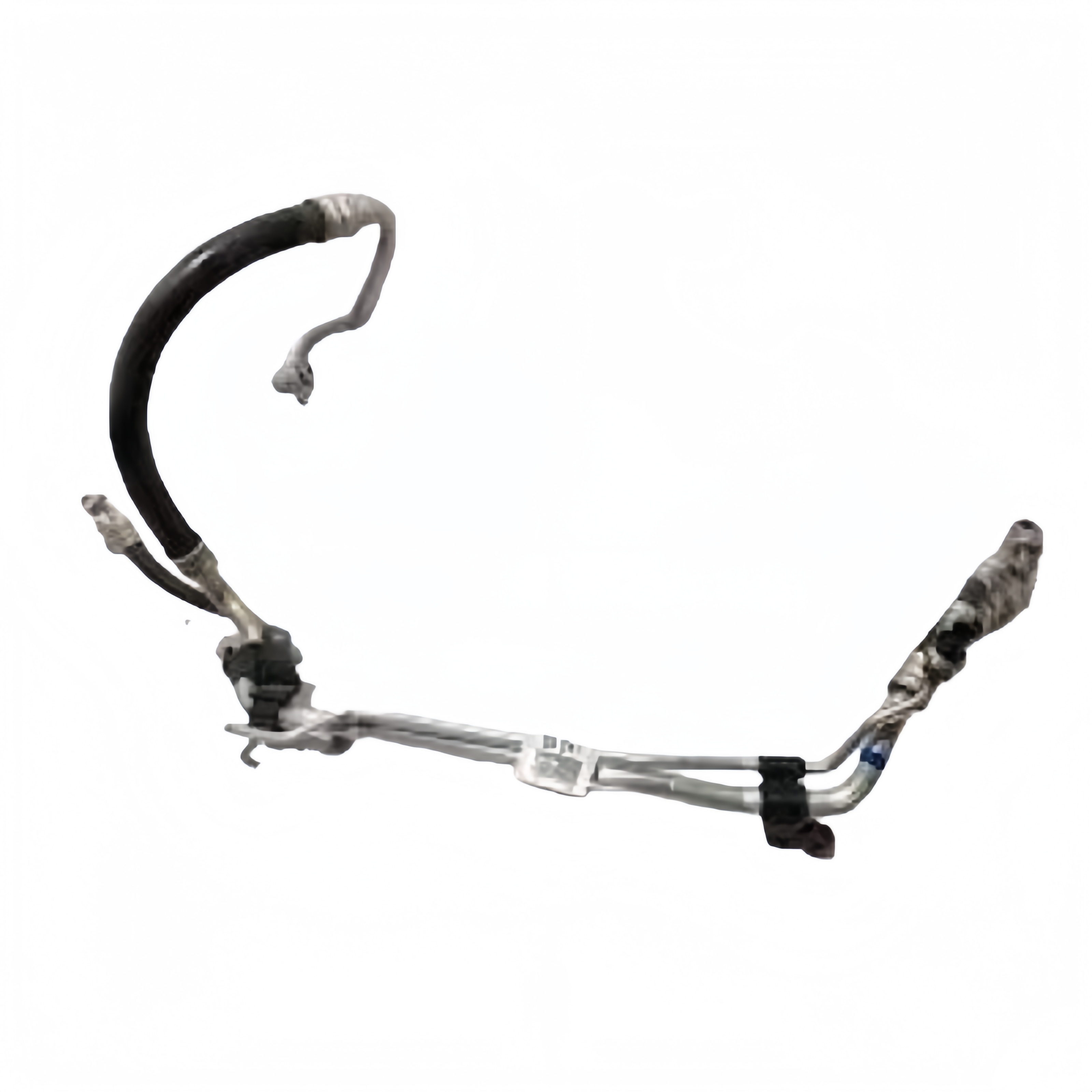
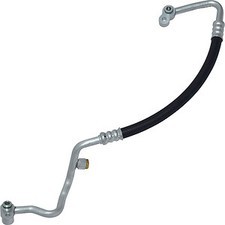
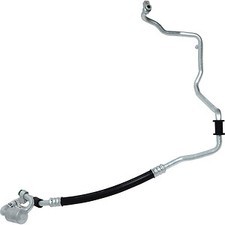
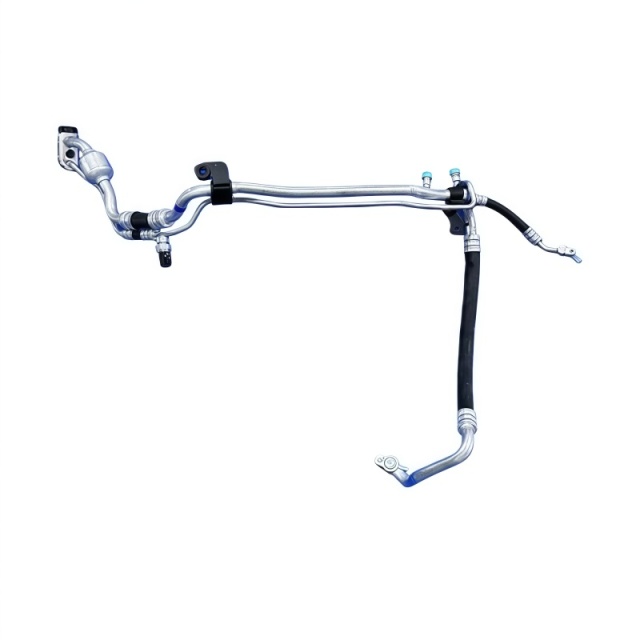
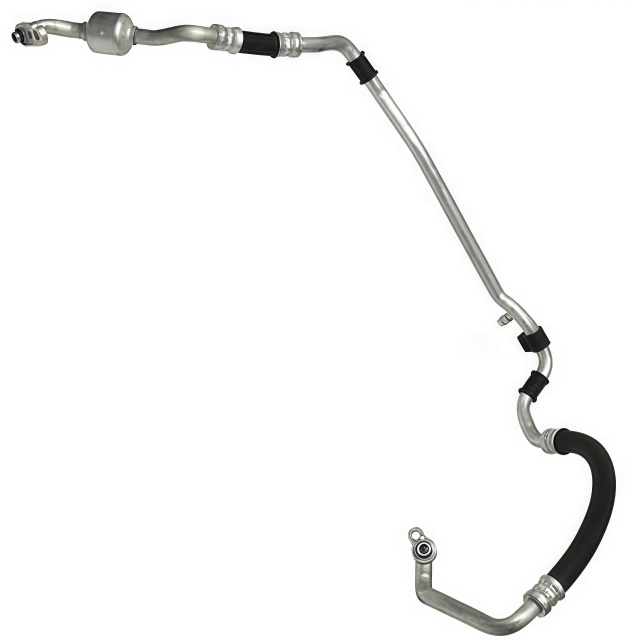
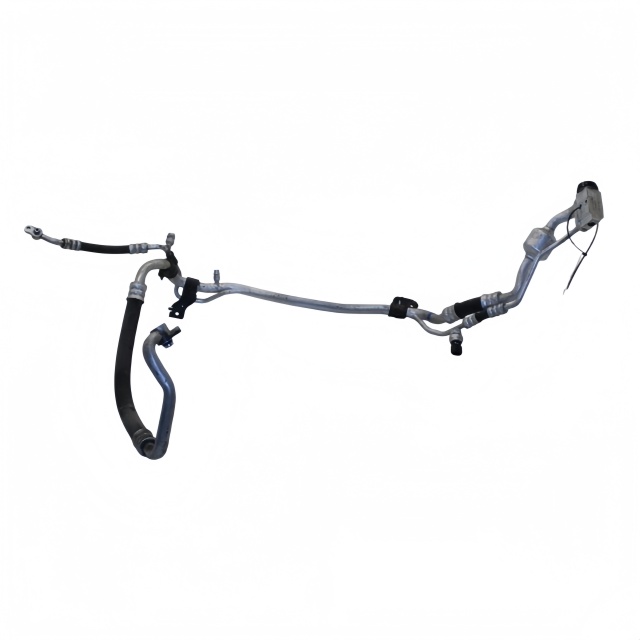
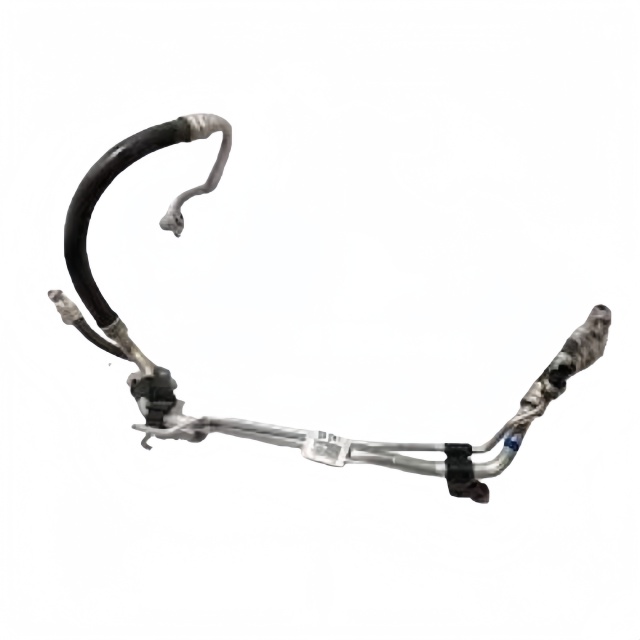
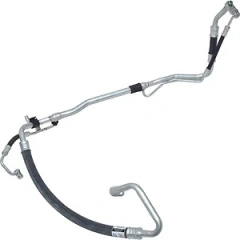
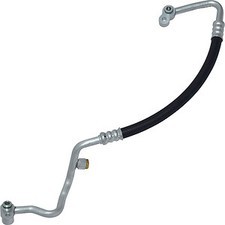
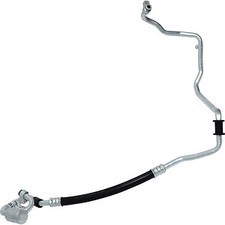
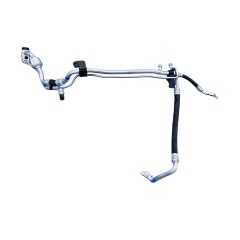
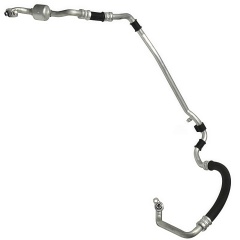
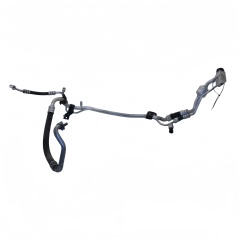
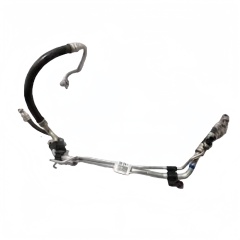
An A/C hose assembly is the pre-formed refrigerant line that runs through the engine bay between the air conditioning components. Rigid metal tubing covers the long runs, a rubber section sits where the car moves, and crimped metal fittings close both ends. It arrives as one unit and goes onto the same mounting points as the line it replaces.
This is a service part, not a modification. Workshops fit it when an original line has corroded, chafed through or been bent in a front-end repair, and the car needs its cooling back rather than a different setup.
The line replaces a leaking or damaged hose on the same route, and nothing else. Seals, refrigerant and labour make up the rest of the job; the part itself has to match the original in number, shape and fittings.
Independent garages and distributors are the usual buyers: the first for a single car in the bay, the second for a Hyundai Kia A/C hose number that moves whenever a customer's air conditioning stops blowing cold.
Because the line is only one piece of an air conditioning repair, buyers usually plan it together with the other car air conditioning parts the job needs, so the whole repair is covered before the car is booked in.
The hard line is metal tubing bent to the route the car needs. A rigid section holds its shape along the body, keeps the line clear of hot and moving parts, and will not sag against a pulley or a hose the way an all-rubber replacement can. The rubber section is where the assembly gives. Engine and body move under load, and a fully rigid line would push that movement straight into the fittings; the rubber absorbs it, which is why the A/C refrigerant line can be bolted down at both ends without being stressed. Both ends are closed with metal fittings crimped onto the hose at the factory. A crimp is a controlled, repeatable seal made with the right tool at the right pressure — it is not a clamp to tighten later, and it should not be re-crimped in the workshop. Brackets fitted to the line hold it at the factory positions, keeping the tube away from body seams and stopping it rubbing through over time. Reuse the original bolts and replace any rubber cushion that has hardened or gone missing. The tubing arrives with a clean metallic surface and the rubber section is matt black. At goods-in, check for crushed tube, sharp bends and cracks at the crimp before the line goes onto the shelf.
Fitment and Part Number Check
- Start with the number on the old line. Read it off the part you are removing, or look it up against the vehicle's VIN in your parts catalogue. If the OEM A/C hose you order carries the same number, the fitment is settled.
- The model year alone is not enough. Accent and Veloster were built for several markets with different air conditioning layouts, so two Hyundai Kia A/C hose numbers can look alike and still not interchange. The number decides, not the badge.
- Compare the shape before draining anything. Curved hard-line sections and bracket positions are the quick visual check — hold the new line against the old one while the system is still closed.
- Check both connections. A fitting that will not start by hand is the wrong part; the thread and the seat should match the original exactly.
- Look at the brackets. The replacement carries its own mounting points, so if an earlier repair left a bracket bent or re-drilled, correct it before the new line goes on.
- Ask when the number does not match. Send the VIN, a photo of the old line and the number you found, and we check it against the catalogue before the order is confirmed — our range covers the wider set of car air conditioning parts for Hyundai and Kia, so another line may be the one your car needs.
Installation Sequence
- Recover the refrigerant before anything is opened. Releasing it to atmosphere is wasteful and regulated in most markets.
- Note the route while the old line is still in place. A photograph of the A/C refrigerant line, its brackets and the way it passes the body saves guesswork when you fit the replacement A/C hose.
- Fit new seals at every joint, lightly coated with the system lubricant. A reused or dry O-ring is the most common cause of a repeat leak on a job that was otherwise done properly.
- Hang the line before tightening anything. Start the bracket bolts and both fitting nuts by hand, check that nothing sits under tension or touches the body, then tighten the brackets.
- Torque the fittings to the figure for that model rather than by feel. Over-tightening distorts the seal seat; under-tightening weeps slowly and comes back as a comeback.
- Evacuate, confirm the vacuum holds, then charge and check. Run the system and watch vent temperature and both crimps for a leak before the car leaves the bay.
Specifications
| Part number | 97775-1R000 |
| Product type | A/C hose assembly |
| System | Vehicle air conditioning, refrigerant circuit |
| Hard line | Pre-bent metal tubing |
| Flexible section | Rubber hose |
| End connections | Crimped metal fittings |
| Connections per unit | Two, one at each end |
| Assembly state | Factory-crimped, ready to fit |
| Mounting | Brackets fitted to the line |
| Unit weight | 1 kg per unit |
| Supplied as | One complete hose assembly |
Ordering and Delivery
- Inquiry and clarification. Send the OEM A/C hose number, the vehicle model and year, the quantity, the packing you need and the market the goods are going to. We reply within 12 hours and confirm each point before quoting.
- Quotation and order confirmation. A formal quotation follows within 24 hours, together with the warranty terms that apply. Once you confirm, we issue the PI or contract and the order is fixed.
- Advance payment. The deposit is usually 30% by T/T, as set out in the contract. Preparation starts as soon as the bank slip reaches us.
- Quality check and stock up. Units are checked against the part number, the quantity on the order and their condition, and only pieces that pass are packed and held for shipment.
- Logistics and delivery. Express, air or sea freight is arranged to suit the order size and destination, with tracking as the shipment moves. The B/L copy is sent before shipment, and the full document set follows settlement of the balance.
- After-sales support. A 6-12 month warranty applies to the part. Send the order number, photos of the fault and the batch details, and we work the claim through with you.
Quality Control & Inspection
Every order of car air conditioning parts goes through staged checks before it leaves us: incoming stock is verified against the OEM part number and listed fitment, running batches are sampled during packing, and a final inspection confirms the cartons match the order before dispatch. If you prefer your own inspector, we cooperate fully with third-party teams such as SGS or BV and make goods available for viewing. Any non-conforming piece is held back first, then replaced or credited. Each shipment travels with a packing list and inspection record for your receiving desk.
FAQ
Does this hose fit both the Hyundai Accent and the Kia Veloster?
Yes — this Hyundai Kia A/C hose is listed for both models. Air conditioning layouts vary between markets and model years, though, so the number on the line you are removing is the safest confirmation. If the old line is already off the car, send us the VIN and a photo and we will check it for you.
Is the assembly supplied complete, with the fittings already crimped?
It is. Every A/C hose assembly leaves us with both ends crimped at the factory and the mounting brackets already attached, so there is nothing to cut, clamp or crimp in the workshop. You fit it as it arrives.
Why does this line combine a metal section with a rubber section?
The rigid part holds the route through the engine bay so the A/C refrigerant line stays clear of hot and moving components, while the rubber section absorbs movement between engine and body. Used together, they keep the fittings from carrying loads they were never designed for.
What should I compare on the old line before ordering?
The OEM number first, then the routing, the bracket positions and the size of both fitting threads. If the number matches but the shape does not, stop and send us photos — that mismatch is almost always a wrong-line order caught in time.
Is this the same part as the cabin heater core?
No. The heater core warms the cabin with engine coolant, while this line carries refrigerant for the air conditioning circuit. On some models they sit close together, which is why a cabin temperature fault is sometimes blamed on the wrong part.
Can a leaking or kinked line be repaired instead of replaced?
A crimped joint that has started to weep cannot be re-crimped in the workshop, and straightening a kinked tube leaves a restriction that turns up later as weak cooling. Fitting a replacement A/C hose is the more reliable repair and takes the guesswork out of the job.